
Establish a comprehensive baseline assessment of your school’s current safety protocols by conducting walkthroughs with staff, students, and local emergency responders to identify gaps in emergency preparedness. Document evacuation routes, lockdown procedures, and communication systems, then compare findings against provincial safety standards to create a prioritized action plan.
Develop role-specific training modules that address the distinct needs of teachers, support staff, and administrators. Teachers require hands-on practice with lockdown procedures and crisis communication with students, while custodial staff need training on secure entry points and facility management during emergencies. Each module should include scenario-based exercises that reflect your school’s unique layout and community context.
Schedule quarterly drills that go beyond traditional fire evacuations to include lockdown, shelter-in-place, and medical emergency scenarios. Research from Canadian schools demonstrates that repeated, realistic practice reduces panic and improves response times by up to 40 percent. Involve local police and paramedics in these exercises to build relationships and refine coordination protocols.
Create trauma-informed training components that equip educators to support students emotionally before, during, and after safety incidents. This includes recognizing signs of anxiety, providing age-appropriate safety discussions, and maintaining classroom routines that foster security. Evidence shows that students who feel psychologically safe alongside physical safety measures demonstrate better academic outcomes and reduced behavioral concerns.
Integrate parent communication into your training framework by establishing clear channels for emergency notifications and regular updates about safety initiatives, building trust and community-wide preparedness.
Why Classroom Safety Training Matters More Than Ever
The landscape of school safety in Canada has shifted dramatically over the past decade, making comprehensive classroom safety training not just beneficial, but essential. While our schools remain fundamentally safe places for learning, the reality is that educators and staff now face a broader range of safety challenges than ever before. Understanding why this training matters begins with acknowledging the changing environment our educational communities navigate daily.
Recent data on violence in Canadian schools reveals concerning trends that underscore the need for preparedness. Safety incidents range from medical emergencies like allergic reactions and seizures to behavioral crises, mental health emergencies, and threats of violence. Each incident, regardless of scale, affects the entire school community. Students who witness or experience unsafe situations often struggle with anxiety and concentration, while staff members report increased stress and concern about their ability to respond effectively.
The psychological impact extends beyond immediate incidents. When educators feel unprepared to handle safety challenges, it affects their confidence and overall job satisfaction. Students are remarkably perceptive; they sense when adults around them are uncertain or anxious. Conversely, when staff demonstrate calm competence during challenging situations, it builds trust and creates a more secure learning environment for everyone.
Beyond the human element, schools in Canada carry significant legal and ethical responsibilities for student and staff safety. Provincial education acts and duty of care requirements make it clear that school administrators and teachers must take reasonable steps to protect those in their care. This includes providing appropriate training and resources to respond to foreseeable emergencies. However, the ethical imperative goes deeper than legal compliance. Every parent who drops their child at school trusts that educators can keep them safe. Meeting that trust requires ongoing preparation and skill development.
Evidence consistently shows that trained staff make better decisions under pressure, communicate more effectively during crises, and help prevent situations from escalating. This preparation creates ripple effects throughout the school community, fostering an environment where both learning and wellbeing can flourish. Investing in comprehensive safety training demonstrates a commitment to protecting what matters most: the people who make our educational communities thrive.
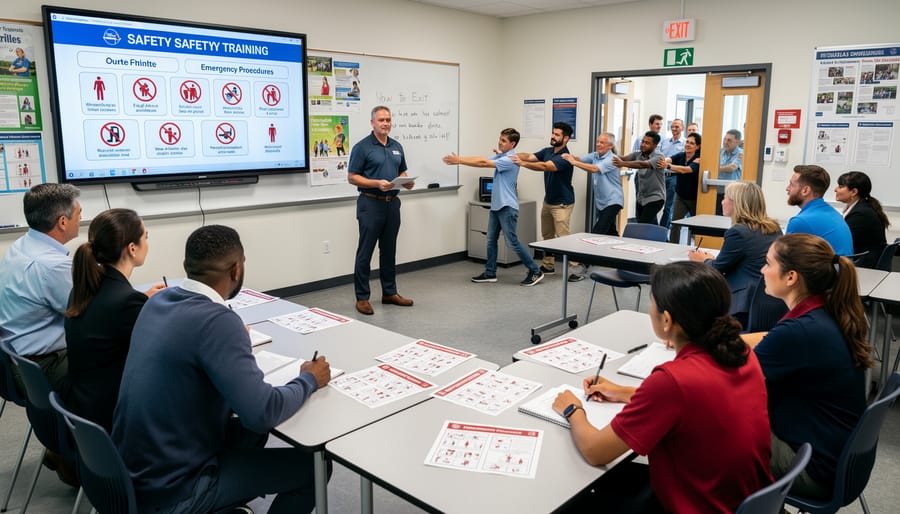
Core Components of Effective Classroom Safety Training
Emergency Response Protocols
Effective emergency response protocols form the foundation of comprehensive classroom safety training. When educators understand and practice these procedures regularly, they can respond confidently during critical situations, ensuring student safety and minimizing confusion.
Every school should establish clear protocols for different emergency scenarios. These include lockdown procedures for threats within or near the school, evacuation plans for fires or hazardous material incidents, and shelter-in-place protocols for severe weather or external environmental dangers. Communication systems must be reliable and redundant, incorporating both digital alerts and traditional methods to reach all staff members quickly.
Essential emergency protocols every educator should know and practice regularly include:
- Lockdown procedures with designated safe spaces and door-securing methods
- Primary and secondary evacuation routes with established meeting points
- Shelter-in-place techniques including sealing classroom entrances
- Student accountability systems for tracking whereabouts during emergencies
- Communication protocols for contacting emergency services and administrators
Regular practice drills help educators internalize these procedures. At Ridgemont Elementary in British Columbia, monthly drills rotated through different scenarios, allowing teachers to identify gaps in their response plans. When an unexpected gas leak occurred, staff executed a smooth evacuation because procedures felt natural rather than theoretical.
Documentation and debriefing after each drill strengthen preparedness. Teachers should discuss what worked well and where improvements are needed, creating a culture of continuous learning. This reflective practice ensures that when real emergencies arise, educators can focus on student care rather than trying to remember unfamiliar procedures.
Threat Assessment and Prevention
Recognizing early warning signs is a critical skill for all school staff, yet it requires a careful balance between vigilance and compassion. Rather than creating an atmosphere of surveillance, effective threat assessment focuses on building connections with students and fostering open communication.
Common warning signs include significant changes in behavior, social withdrawal, declining academic performance, expressions of hopelessness, or concerning online activity. However, these indicators alone don’t predict violence. Research shows that behavioral threat assessments work best when they emphasize care and support rather than punishment.
Consider a real-life example: A grade 10 student began missing classes and writing increasingly dark poetry. Instead of disciplinary action, a concerned teacher reached out with empathy. Through conversation, the team discovered the student was struggling with family issues and connected them with appropriate mental health resources.
Training should equip staff to respond with curiosity and care when noticing concerning patterns. Questions like “How can we support this student?” prove more effective than “Is this student dangerous?” This approach requires multidisciplinary teams including counselors, administrators, and community mental health professionals working together.
Prevention works best when schools create environments where students feel comfortable sharing concerns about themselves or peers. Encourage staff to document observations objectively, share information appropriately with relevant team members, and always prioritize connecting students with supportive resources. Remember, the goal isn’t to profile students but to identify those who need help before situations escalate.

De-escalation Techniques
Effective de-escalation begins with recognizing early warning signs of distress. When a student shows agitation, educators should maintain calm body language, use a steady tone, and create physical space to reduce feelings of being threatened. Active listening plays a crucial role—acknowledging emotions without judgment helps students feel heard and respected.
Trauma-informed approaches recognize that challenging behaviours often stem from underlying stress or past experiences. Instead of responding with consequences immediately, consider asking “What happened?” rather than “What’s wrong with you?” This shift validates the student’s experience and opens pathways for problem-solving together.
Communication techniques matter significantly. Use simple, clear language and offer choices when possible, which gives students a sense of control. For example, “Would you like to step into the quiet corner or take a walk with me?” empowers rather than commands. Avoid confrontational phrases like “Calm down” or “You need to stop right now,” which typically escalate tension.
Creating a predictable classroom environment reduces anxiety that leads to conflicts. Establish consistent routines and teach self-regulation strategies during calm moments, not during crises. Many Canadian schools successfully implement breathing exercises and mindfulness practices as preventive tools. Remember, de-escalation isn’t about controlling behaviour—it’s about supporting students through difficult moments with empathy and practical guidance.
First Aid and Medical Emergency Response
Every educator should possess fundamental first aid knowledge to respond confidently during medical emergencies. Understanding how to assess a situation quickly and provide appropriate care can make a significant difference in a child’s wellbeing.
Start by familiarizing yourself with common classroom medical situations. Minor injuries like cuts, scrapes, and bruises require basic wound care—cleaning with water, applying pressure to stop bleeding, and covering with a clean bandage. For more serious injuries involving head trauma, suspected fractures, or significant bleeding, keep the student calm and still while calling for emergency services immediately.
Allergic reactions demand particular attention in school settings. Learn to recognize signs of anaphylaxis, including difficulty breathing, swelling of the face or throat, and hives. Know the location of epinephrine auto-injectors for students with known allergies and understand how to administer them properly. Minutes matter in severe allergic reactions.
Keep emergency contact information readily accessible and ensure multiple staff members know where it’s stored. Establish clear protocols for when to call 911 versus when to contact parents first. For instance, loss of consciousness, difficulty breathing, chest pain, severe bleeding, or seizures in students without a seizure disorder warrant immediate emergency calls.
Consider obtaining certification in pediatric first aid and CPR through recognized organizations like St. John Ambulance or the Canadian Red Cross. Regular refresher courses ensure your skills remain current and your confidence stays strong when responding to real emergencies.
Creating a Culture of Safety in Your Classroom
Creating a truly safe classroom environment goes far beyond fire drills and lockdown procedures. While emergency preparedness remains essential, the foundation of classroom safety lies in the daily practices that foster trust, respect, and psychological well-being among students and staff.
Research consistently demonstrates that schools with positive climates experience fewer safety incidents overall. When students feel valued, heard, and connected to their teachers and peers, they’re more likely to report concerns, seek help when struggling, and intervene when they notice troubling behaviour among classmates. This preventative approach addresses potential issues before they escalate into serious safety threats.
Building psychological safety starts with establishing clear expectations and consistent routines. Students thrive when they understand what’s expected of them and can predict how adults will respond. This predictability reduces anxiety and helps children feel secure enough to take academic risks, ask questions, and express concerns without fear of ridicule or punishment.
Consider how a Grade 5 teacher in Ontario transformed her classroom by implementing morning check-ins where students could share their emotional state using a simple colour-coded system. This small daily practice helped her identify students who needed additional support and prevented several conflicts that might have otherwise disrupted learning or compromised safety.
Relationship-building deserves dedicated time and attention. When educators invest in knowing their students as individuals—understanding their strengths, challenges, family situations, and interests—they can recognize warning signs earlier and respond more effectively. A student who typically greets you cheerfully but suddenly becomes withdrawn may need support before their distress manifests in concerning ways.
Creating multiple channels for reporting concerns empowers students to become active participants in maintaining classroom safety. Anonymous reporting systems, trusted adult programs, and regular classroom discussions about what to do when something feels wrong give students practical tools for seeking help. However, these systems only work when students trust that adults will respond appropriately and protect their confidentiality.
Inclusive practices also strengthen safety culture. When classroom materials, activities, and discussions reflect diverse backgrounds and experiences, all students feel they belong. This sense of belonging is protective—students who feel marginalized or excluded face higher risks for both victimization and concerning behaviour.
Regular communication with families reinforces safety efforts. Parents and caregivers often notice changes in their children’s behaviour or hear concerns that students might not share at school. Establishing open, non-judgmental dialogue with families creates a partnership that benefits everyone and strengthens the safety net surrounding each child.

Training Delivery Methods That Actually Work
Choosing the right training delivery method can make the difference between knowledge that stays with your staff and information that’s quickly forgotten. Research consistently shows that a blended approach, combining multiple methods, produces the strongest outcomes for classroom safety preparedness.
In-person workshops remain the foundation of effective safety training. These sessions allow facilitators to read the room, address specific concerns, and adapt content to your school’s unique context. They’re particularly valuable for introducing new protocols and building team cohesion. A school in Calgary found that their annual in-person sessions created important opportunities for staff to voice concerns and problem-solve together, strengthening their overall safety culture. However, these workshops require dedicated time away from regular duties and work best when limited to 2-3 hours to maintain engagement.
Online modules offer flexibility that busy educators appreciate. Staff can complete training during prep periods or professional development days at their own pace. These work well for annual refreshers, policy updates, and foundational knowledge. The challenge lies in ensuring completion and genuine engagement rather than simply clicking through slides. Evidence suggests that interactive online modules with scenario-based questions produce better retention than passive video watching.
| Training Method | Best Used For | Time Required | Effectiveness |
|---|---|---|---|
| In-Person Workshops | New protocols, team building, complex topics | 2-3 hours | High for initial learning |
| Online Modules | Annual refreshers, policy updates, foundational knowledge | 30-60 minutes | Moderate for retention |
| Tabletop Exercises | Decision-making practice, protocol review | 45-90 minutes | High for critical thinking |
| Full-Scale Drills | Physical response, muscle memory, system testing | 1-2 hours with debrief | Highest for practical skills |
Tabletop exercises bridge the gap between theory and practice. During these discussion-based sessions, teams walk through scenarios without physical movement, focusing on decision-making and communication. A Toronto school district reported that quarterly tabletop exercises helped identify gaps in their emergency plans that hadn’t surfaced during standard training.
Full-scale drills provide the most realistic practice but require careful planning to avoid causing distress. These hands-on experiences build muscle memory and test your systems under simulated pressure. When conducted with proper support and thorough debriefing, they significantly improve response times and confidence.
The most effective approach combines all four methods throughout the year, creating multiple touchpoints that reinforce learning and accommodate different learning styles within your team.
Overcoming Common Challenges in Safety Training Implementation
Implementing classroom safety training often meets with genuine obstacles that can feel overwhelming, but understanding these challenges helps schools develop realistic solutions that work within their unique contexts.
Time constraints rank among the most frequently cited barriers. With curriculum demands already stretching instructional hours, finding space for safety training seems nearly impossible. However, schools across Canada have successfully integrated safety concepts into existing lessons. For example, a Toronto elementary school incorporated lockdown procedures into their morning routine practice, taking just five minutes twice monthly. Rather than viewing safety training as an addition to the school day, consider it an essential component of creating a learning environment where students can thrive.
Budget limitations present another significant hurdle. While comprehensive training programs require investment, many effective strategies cost little or nothing. Peer-to-peer training sessions, where experienced staff share knowledge with colleagues, build capacity without external expenses. Provincial education departments often provide free resources and training modules specifically designed for Canadian schools. Collaborating with local emergency services frequently yields no-cost presentations and expertise.
Staff resistance sometimes emerges from fear, burnout, or concerns about traumatizing students. Addressing these feelings with empathy proves essential. One Manitoba school administrator found success by involving hesitant teachers in planning discussions, allowing them to voice concerns and shape training approaches. When staff feel heard and understand the protective intent behind training, resistance typically decreases.
Balancing safety preparations with maintaining a welcoming, nurturing environment creates legitimate tension. Children need to feel secure, not scared. Evidence shows that age-appropriate language and focusing on empowerment rather than fear effectively address this challenge. A Vancouver school frames safety training as “being prepared helpers,” which resonates positively with younger students while teaching necessary skills.
Regular communication with parents about training approaches builds community support and addresses concerns proactively. Transparency about methods and intentions helps families understand that safety training aims to protect childhood, not diminish it.
What Parents Need to Know About Classroom Safety Training
Parents play a vital role in creating a comprehensive school safety culture, yet discussing safety measures requires careful balance between transparency and avoiding unnecessary alarm. The key is approaching these conversations with honesty while emphasizing proactive prevention rather than fearful reaction.
When communicating with parents about classroom safety training, focus on the practical skills students are learning. For example, explain that lockdown drills teach decision-making and situational awareness—life skills that extend beyond emergencies. Share that evacuation procedures help children develop calm responses to various situations, from fire alarms to weather events. This approach builds understanding without dwelling on worst-case scenarios.
Schools that successfully partner with parents often invite them to observe training sessions or participate in evening information sessions. A middle school in Ontario found that hosting parent walk-throughs of safety procedures increased family confidence and reduced anxiety-driven questions. Parents appreciated seeing firsthand how staff made training age-appropriate and non-threatening.
Transparency matters when addressing parent concerns. Be prepared to explain the evidence-based practices your school follows, the frequency of training, and how staff support students who may feel anxious. Create accessible channels for parent questions through regular newsletters, dedicated safety committee meetings, or online forums where concerns receive timely responses.
Remember that parents need to understand their role in reinforcing safety messages at home. Provide simple talking points they can use with their children, emphasizing that safety training helps everyone feel prepared and protected. Encourage families to discuss their own home emergency plans, creating continuity between school and home safety practices.
Building these partnerships transforms parents from worried observers into informed advocates who support your safety efforts while maintaining their children’s sense of security and normalcy.

Moving Forward: Next Steps for Your School
Taking the first step toward enhancing classroom safety training can feel overwhelming, but breaking the process into manageable actions makes it achievable. Whether you’re starting from scratch or strengthening existing programs, a systematic approach ensures nothing falls through the cracks.
Begin by conducting an honest assessment of your school’s current safety training. Gather input from teachers, support staff, students, and parents to understand what’s working and where gaps exist. This collaborative approach not only identifies needs but also builds buy-in across your school community.
- Form a safety committee with representation from administration, teachers, support staff, parents, and where appropriate, students to guide the assessment and planning process.
- Review your current training programs by documenting what exists, when training last occurred, participation rates, and any feedback received from participants.
- Identify specific gaps by comparing your current programs against evidence-based best practices for classroom safety, including emergency response, mental health awareness, and conflict de-escalation.
- Prioritize needs based on urgency, available resources, and potential impact on student and staff safety.
- Develop a phased implementation plan with realistic timelines, assigned responsibilities, and measurable goals for each training component.
- Connect with the Canadian Safe School Network to access training resources, evidence-based frameworks, and support for program development tailored to Canadian schools.
Remember that building a comprehensive safety training program is a journey, not a one-time event. Start with your highest priority areas and build momentum through small successes. Many schools find it helpful to pilot new training approaches with a small group before rolling them out school-wide.
The Canadian Safe School Network offers valuable resources including training modules, implementation guides, and consultation services specifically designed for Canadian educational contexts. Their evidence-based approaches can help you develop programs that truly meet your school’s unique needs while staying current with best practices in school safety.
Investing in comprehensive classroom safety training is ultimately an investment in the well-being and success of every student in our schools. When educators feel prepared and confident in their ability to respond to emergencies, they create learning environments where children can focus on growth, discovery, and achievement rather than fear. This preparation extends beyond crisis response—it encompasses the daily practices that make classrooms feel secure and supportive for all learners.
The evidence is clear: schools that prioritize ongoing safety training see improved outcomes not just in emergency preparedness, but in overall school climate and student achievement. Teachers who have participated in quality safety programs report feeling more capable of managing challenging situations while maintaining the nurturing, positive atmosphere that supports learning. Consider the elementary teacher in Ontario who credited her training with helping her calmly guide students during a lockdown, or the administrator in British Columbia whose team’s coordinated response during a medical emergency potentially saved a student’s life.
Now is the time to take action. Whether you are an educator seeking professional development, an administrator planning your school’s training schedule, or a parent advocating for stronger safety measures, your voice and involvement matter. Start by reviewing your current safety protocols, engaging in conversations with your school community, and committing to regular, evidence-based training updates. Remember, comprehensive safety training empowers everyone in the school community to act confidently and compassionately, ensuring that our classrooms remain the safe, welcoming spaces our children deserve.